visit counter for blogspot
blogberrygarden  
Thanks
4 reading
this blog
amazing finds blog reader opinion feedback comments post
Showing posts with label food. Show all posts

1/31/17

BeetRoot Cooking Food with Benefits

Beetroot is a vegetable of choice for those people who like great food.
Its rich taste, deep color and ease of use puts it on top of the list when it comes to preparing most enjoyable memorable meals with lots of health benefits of pure natural food. 

Cooking beets is not a very complicated process and the final product is very pleasing and satisfying in taste, appearance and nutritional content.

The many ways to use and prepare natural beetroot. Food with benefits.

There are many ways to prepare beetroots and no extensive kitchen experience is needed to create a masterpiece that is full of vitamins and easy on the eyes with the help of the red or golden beets.

Although it is hard and dense in its raw pure form beets can be eaten raw and they are wonderfully crunchy and not hard to chew. You can grate or juice them and you have an even faster and softer meal that you can have any time during the day.

Raw beets should be consumed in moderate amounts to benefit from their amazing health food qualities.
Cooked beets are also an awesome and wholesome food with many health benefits for people of all ages.

Beets should not be cooked for a long time as longer cooking time decreases its vitamin content and does not add any improvements to their already great taste.
Quickly cooked beets are the best ingredient in many appetizers or salads for you to enjoy.

You don’t need to peel your beets before cooking them, their outer skin is thin and soft when cooked and it contains good health food properties as well.
You may wish to peel and discard the beet skin if you like after cooking them, it’s a matter of choice, in this case you don’t even need a vegetable peeler or a knife as it's very fast and easy to do just by hands due to the softness of the cooked beetroot.

There are several ways to cook beets, every method has its beneficial qualities and all of them are simple and rather fast.

Ways to cook beets:
  1. Boiling
  2. Steaming
  3. Baking
  4. Grilling
  5. Frying
  6. Roasting

Types of meals to prepare using beets as the main ingredient:
  1. Grated beets
  2. Beet salad
  3. Beet soup called borscht
  4. Smoothies
  5. Sandwiches
  6. Juices
  7. Veggie  burger
  8. Pancakes
  9. Cakes
  10. Muffins
  11. Pizza
  12. Stuffed buns
  13. Snacks
  14. Appetizers

Ways to use raw beets:
  1. Raw beet salad
  2. Raw beet snack
  3. Grated beets
  4. Juicing
  5. Cultured beets

To boil or steam beets you only need a minimal amount of time enough for the beets to get softer and lose their crunchiness. This can take less than 10 minutes for small or cut beets. The longer you cook your beets the more decrease you get in the vitamin content. So you may not want to overcook your beets.

The water from boiling or steaming beets does not need to be discarded, it contains good beneficial qualities that were obtained from the process of cooking the beetroot in it and you can just drink it as is or reserve it for making soup or add it to you smoothies.

Watch the videos here for more ideas and help to prepare your wonderful delicious healthy meals and dishes using pure natural fresh colorful beetroot!


Which way of preparing beets do you like best?
What is your favorite kind of meal that uses beets?

8/29/11

Make low reduced salt vinegar pickles olives capers from canned ones Low sodium recipe


How to take out salt and vinegar from store bought canned pickles, olives, capers.

Make tasty reduced salt and vinegar salads and sandwiches.

Salt and vinegar are great for preserving food. Pickled food can stay edible indefinitely or at list for a very very long time. The only thing is - to eat that food, that has so much salt and vinegar in it that it never spoils is not very pleasant nor good.

Pickles, olives, capers are some of the food that is made with the help of a huge amount of salt and vinegar and using it straight from the can or jar brings all that salt and vinegar into your salad, entrée, sandwich or anything you ad it to or mix it with.

You can always remove excess salt and vinegar from any store bought pickled food and this method that I'm describing bellow is very easy and works well for olives, cucumbers, capers and many other salty vinegary foods.

Cut your olives.

cut green pimento almond olives plate

pic: cut green pimento olives

First you need to drain your pickles or olives or whatever it is that you are using completely and ahead of the time when you intend to use it so that it dries from that brine solution it was in. After you drain them you can cut it in halves or smaller size pieces. Smaller pieces release more vinegar and salt.

Keep your drained pickled foods in a glass jar with a lid in the refrigerator until you are ready to use it. You can take out and drain a portion of your pickles only and leave the rest in the brine if you don't use it all at the same time. I noticed that capers or olives keep well for a very long time after being drained. That tells you how much salt and/ or vinegar they have absorbed already while being in the brine solution.

If you want to reduce salt and vinegar even more and make it really low sodium food, just soak your picked items in fresh water for a while then drain the soaking water also. It's best to use cold water for soaking so that it doesn't extract additional flavor from pickles or olives since you are going to discard that water.

Keep the jars with your pickled foods always refrigerated. If you try the water you soaked it in you may be quite surprised how salty/ vinegary it is. You'd never use that water for any dish so no point using your pickles when they are loaded with all that vinegar/ salt.

You can even change the soaking water more than once if it's still too salty. It's not unusual for pickles, olives and especially capers to be preserved in a very strong brine initially, probably much stronger than necessary but it guaranties that the stuff wont spoil for a long time.

almond green olives pickled in salt vinegar cut on plate

pic: pimento and almond olives
take out the vinegar. reduce vinegar and salt in pickled olives

Using salt and vinegar will keep food fresh but you can remove it from food when you're ready to use it. That will make your meal even tastier and fresher.

glass jars salt vinegar pickled green olives

pic: glass jars with green olives
whole olives in brine solution. drained and cut olives


in this post: reduce salt and sodium in pickled foods low salt pickles olives capers take out vinegar and salt from store bought pickles olives capers in a jar/ can green pimento and almond cut olives

8/27/11

Keep butter fresh Sandwich ready Easy to spread Save money too

Fresh butter, easy to spread and sandwich ready, and lots of it more, is a good thing for any fridge.


I don't use a lot of butter in my house but when I do, I like to have it fresh, of course, and easy to spread.

I always keep a good amount of butter in my refrigerator so that I don't suddenly run out of it and I never know when I might need it. Sometimes I don't need it for weeks because I might want to use other things in my food like olive or sesame or some other oils, or I might favor some natural mayonnaise for a while or soy sauce and tomato sauce.
Having enough butter on hand if I want to bake some fatty cookies is important also.

If I used butter every day, to always have it soft, sandwich ready and easy to spread I could keep a small piece on the counter, outside of the refrigerator at room temperature but that is not an option because that piece would stand a good chance to go rancid long before I would get to it again.

The simple solution for this situation is to keep all my butter in the freezer except for a small piece that I put in a plastic container with a lid and keep it in the fridge. The container I use is the one I actually reuse, it initially contained some other food that came in it from the food market. It turns out to be just perfect for butter, the glass could possibly get scratched or chipped by the knife.

The important thing here is to cut the butter into small cubes before putting it in the freezer so that a small piece could be taken out whenever needed.
Also this way I can save some money by buying the butter in a bigger size package. It is cheaper per oz or gram and the butter stays good and fresh in the freezer for a really long time.

Another good part in all this, and this is actually the best part besides everything else, that by cutting butter into small cubes/ portions and keeping it in the fridge in that size pieces it makes it very easy to use and spread. It almost instantly gets soft when you take it out of the refrigerator because of the piece's small size. If you want it really soft you only need to wait for a very short time before it gets to that state. A bigger piece would take much longer and you'd stay hungry and angry at that butter that would not be sandwich ready and crumble instead of spreading.

The picture bellow has the butter on it that is left from a 1 lb brick of butter on it's original wrapper and it's kept in the freezer in the same wrapping paper it came in. You can cut the butter right on that paper - less mess, wrap it back and put it in a plastic bag, it keeps the cubes together neatly and they are still easy to separate when frozen.

small fresh frozen butter cubes original wrapping paper

pic: Butter cut into cubes before being put in the freezer.

small fresh sandwich spreadable butter cubes soft plastic container

pic: Soft small cubes of butter in the plastic container that is kept in the refrigerator.

This butter keeping technique is as simple as it is useful.
Amazingly, it serves not one but 4 purposes:

1. Save money on butter
2. Keep butter always fresh
3. Always have a sandwich ready piece of butter
4. Always have lots of butter to bake the fattest cookies you might desire

And now it's time to go make that perfectly buttery sandwich with some whole wheat bread, nutmeg and... nothing else really. Hibiscus tea comes along with it. Or Green tea - that's always welcome too.


in this post: keep butter always fresh easy to spread on sandwich making butter cubes save money by buying big packages of butter using refrigerator freezer plastic containers knife

8/26/11

Avoid whole leaf tea side effects/dangers Warnings Risks Drink it safely like water


Loose whole leaf green, black, white, oolong, pu-erh or any kind of tea is delicious, nutritious, beneficial to people when properly prepared and consumed in moderate amounts but even then there is a real possibility of having side effects or some type of allergy for sensitive individuals.

I know for a fact it is possible to be tea sensitive and it can be lessen or avoided while still drinking your cup of tea on a regular basis.

There are some health risks and dangers associated with drinking any tea and especially japanese green tea called matcha tea which can be avoided if you are aware of it.
Green tea contains caffeine, vitamin k and also fluoride which can cause various problems when consumed in large quantities. Tea can also irritate your stomach which is not the result you'd want to get from drinking it.
This warnings are not usually advertised on tea packages and it helps to be conscious of these abilities of tea to produce undesirable effects on your health and body.

The side effects of green and other teas can be mild or quite heavy, depending on the level of sensitivity and the strength and amount of tea being consumed. You can avoid the tea dangers by experimenting with different ways of making and drinking your tea, while being careful not to drink tea that is too strong and not to drink it in excess.

The purpose of this post is to tell how you can make good green, black, white, oolong, pu-erh tea that is more like 'tea flavored drink' as opposed to regular tea but still has that distinct tea taste and you can sip it throughout the day without being concerned with having some kind of side affects or a negative reaction to it due to many complex nutritional tea properties.

Drinking tea made using the method below would be close to drinking plain water. This tea drink is  not strong at all but it still tastes like tea at the same time.
It's very simple and involves making 'tea drink' rather than 'tea' which is essentially like making your tea much less strong and keeping it cool by putting it in a refrigerator and it has just a few steps to achieve the right results.

Having fresh made instant tea would be another benefit of this method, it works well when you need more convenience for the busy times.

It's also partially decaffeinated even though I only use loose whole leaf tea in it's natural state, not any decaffeinated kind.
I will describe the method a little later here because I would like to explain how I came to this solution and the reasons for it.

Good high quality tea - green, black, white, oolong, pu-erh has been shown to have positive effect on those people who drink it regularly in reasonable amount which can be a few cups a day, it tastes refreshing, uplifting and can even be addictive.

However even a moderate amount of tea a day every or almost every day can have a different effect and it depends on several factors. High quality whole leaf tea and especially green tea and even more specifically Japanese sencha green tea while being beneficial for health is not completely innocent drink in terms of how it may affect different people.

Besides caffeine tea has many other properties that while being beneficial to a lot of people can cause very undesirable reaction in tea sensitive individuals and there's a very large number of those.

When I noticed a clear indication of the presence of those different reactions I started searching for information on it, it was quite surprising and even confusing because of the overpowering amount of the facts that were out there describing only the positive side of drinking teas, green, black, oolong, white or pu-erh.

It was not even possible to find a piece of information that would tell about other effects and I didn't know what to make out of it.
I continued my search and eventually found plenty of proof that it is in fact possible to have a different reaction to drinking tea, green in particular and that validated my concerns and relieved my doubts.

I found that a lot of people experience the same or different side effects from drinking green, black, white or other tea, and most people are trying to drink more green tea due to it's widely known health benefits.

Those side effects from drinking tea are often hard to describe, they have a kind of almost 'not there' nature and yet it's absolutely certainly there. It can vary from a slight discomfort to a very strong and obvious discomfort and may be felt somewhat similar to heavy head or unsettled stomach or something like general felling of being under pressure and low key or something else that is hard to name.

The hard part was that the taste of good whole leaf green, black, oolong, white or pu-erh tea, any high quality tea was something I felt I was almost addicted to so I've experimented with many different ways of making and drinking it.

While doing my search on the tea side effects or allergy I found advises such as not drinking strong tea or not drinking it at certain times of the day or at different times based on the personal conditions.

It's not advisable to drink tea on an empty stomach and neither full stomach due to the acid being produced by the tea which can lead to the stomach being irritated. It's also not a good idea to drink tea close to bed time or in some specific conditions such as when you loose or lost blood because tea is not a suitable food product for that, it can make you more anemic. Also it may not feel and even taste good even if you just have a cold or feel sick.

It can feel different to different individuals but it's a possibility and it can be lessened or avoided.
So for the best results you can drink a few cups between meals and that should cause no side effects.

I wanted to drink tea more often and be less concern with the time of the day or other factors so I devised this method and it seems to be the solution to all that.

I start with the best quality loose whole leaf tea I can find and able to afford. About 1 or 2 big spoons of tea leaves go into a glass and get a hot water bath or a rinse for 15 to 45 seconds depending on the kind of tea. The shortest time is good for Japanese sencha green tea and the longest for strong black tea like Assam. The sencha tea is very raw and delicate so I try to be gentle with it and pour not but almost boiling water over it to give it a rinse/ hot bath.

After that I may even rinse the tea again with room temperature water if I want to take out the residue from the first rinse. The second rinse is immediate and takes just a couple of seconds. The amount of water for both rinses is very small, just enough to cover the leaves in a glass. The water from both rinses gets discarded.

Giving tea a hot rinse makes it much cleaner, tea may have different residue from the production process and also lessens the amount of caffeine in substantial amount.

Any glass or ceramic cup or jar can be used for this tea making recipe.
After the rinse I pour a little larger amount of water over the leaves, the temperature of the water may be a little lover than that at the boiling point for green tea and even a few more bits lower for sencha and I give it about 2 to 4 min before pouring it off into a glass jar.

Any clean glass jar with a lid or a bottle can be used, I like using a jar because it's easier to clean than a bottle.

I repeat this process 2 more times with the steeping/ brewing time shorter than the first one and another 1 last time using just room temperature water.

When pouring steeped tea into a jar and also to pour/ throw out the rinse water I use a small cup size stainless steel strainer in the inverted position in relation to the jar so that all tea leaves stay in the glass and you don't have to move them in and out for multiple steeping/ brewing steps because they don't get collected in the strainer.
At the same time the only thing used for brewing tea this way is the glass so there is no other materials involved such as metal or plastic, no extra parts which can affect the taste and quality of prepared tea.
Using paper or fabric bags to brew tea would be completely unsuitable for making good tasting and good quality tea.

This is how you can hold a cup strainer to pour out tea into a jar and keep the tea leaves inside the glass to use it for multiple brewing process.

whole leaf green black white oolong Pu-erh tea strainer glass

pic: whole leaf tea being strained using stainless stell cup strainer

Steeping high quality green, black, white and especially oolong and pu-erh tea multiple times is perfectly fine and widely used by many people everywhere including tea producing countries like Japan and China even when making just a regular cup of tea.

In the method I'm describing here all tea from 4 step steeping/ brewing goes into one jar to create a multi step mix. After all the steeping is finished I add an almost undetectable amount of citric acid to the jar with tea. Citric acid prevents farther oxidation of the tea while it's being stored in the refrigerator for a day or more. The amount of citric acid I add is so small that it doesn't add any sourness to the taste of tea, it's just a few grains of powder.

Citric acid is sold as a white powder and can be bought in some stores, often ethnic ones. It's close to being a natural product and acts/ used as preservative for food. You don't have to use it but it's an option.

You can also use a very tiny amount of ascorbic acid powder which is sold as vitamin C. Only use pure ascorbic acid powder with no additives.

These two acids, citric and ascorbic, actually also help in digestion of green tea. Lemon can be used but it's hard to make it so that it doesn't alter the taste of tea. If you like the tea taste lemony then of course just use fresh lemon for that.

After all is finished, the jar with a tight lid on it goes into the fridge and consists of very concentrated pure natural fresh tea. You can then take a very small amount of it to mix with a glass of pure fresh water, 1 or 2 spoons of whole leaf tea being used in this preparation can make a few glasses of tea, depending how week or strong you want it to be. I like to make weaker tea so that I can drink it throughout the day and one jar may last for more than 5 times.

Here's a jar of freshly made concentrated tea.

whole leaf green black white oolong Pu-erh tea glass jar

pic: fresh brewed whole leaf tea in a glass jar.
concentrated tea

You can add hot or cold water to this tea, it's your choice.
Cold tea seems to cause no stomach irritation compared to hot tea. If you are tea sensitive you may be able to drink a larger amount of weaker cold green tea with no negative effect.

Even though the tea made using this recipe is a lot weaker than a regular cup of tea the taste of the tea is still there when you drink it between meals and the absence of the taste of other foods makes it more apparent.

So in case of being too sensitive to green, black, white, oolong, Pu-erh, any tea this may be the way to enjoy your tea.
If you are not that sensitive and can drink stronger tea with no side effects you can just use this method and prepare concentrated tea in advance to make 'instant' tea any time.


in this post: make green white black oolong pu-erh tea loose whole leaf tea side effects warnings allergy risk negative effect dangers toxicity hot cold fresh made tea concentrated decaffeinated fresh made tea instant drink

3/29/11

New York City Street Views Lunch Break Friends Snacks Good Talks


New York City streets offer a lot of choices when it comes to having lunch or getting something to snack on and the city street views are as divers as the looks and personalities of people who make the streets come alive and lovely to walk on.
You can have a good time whether you are picking up some snack or lunch or just taking a walk down the street in the New York City.

If you are having a meet up with a friend and have been planning it for a while or if you just run into someone who you have not seen but is actually a nice person to be around it always works better if you have a nice snack supply with you so that the conversation can go smoothly and not be interrupted by hungry thoughts or rumbling belly. Of course the small snack may not be enough and a nice size sandwich is a better alternative.

As for drink - you can get you favorite one too, watch for sugar and caffeine if getting hyper is not on your list, otherwise don't. Water may taste too plain for that special occasion and you probably can sip your 8-glasses-a-day recommended amount while being at your desk on in the car.
While nothing is as cleansing as pure fresh simple spring water for a lovely talk in a good company getting something a little more sparkly is perfectly all right.

Lunch or snack, it's the company that makes it taste most flavorful and
if the shoes are already comfortable it can only get better.

New York city street view. Good place, good friends.

New York Lunch Break time City Street Views sidewalk

Christopher from 'Quite All Right' blog took this friendly shot on the street of his wonderful city which is New York and he happens to be quite knowledgeable about all the places worth going whether for lunch or just to walk around.


in this post: girls guys new york city lunch break men women people meeting with friends day time food snack sandwich sidewalk man woman meet talking on sidewalk

3/7/11

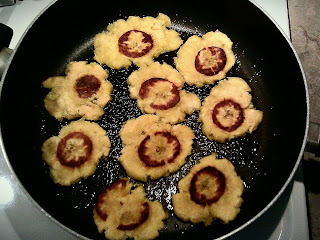
How to cook plantain bananas recipe Pretty fried eatables


fried plantain bananas cooking pretty

Cooking plantain bananas is fairly simple as described in this recipe.
These plantain bananas look pretty decorative, frying is not my favorite method of cooking food but for rare occasion this looks quite appealing.

To prepare this pretty bananas you need:

1 plantain banana half ripe
A pinch of salt
1 tbsp olive oil

Cut banana into 1 inch circles, use a skillet to brown banana circles in olive oil.
Place browned banana circles flat in one layer on aluminum foil and wrap aluminum foil over banana pieces. Pound wrapped in foil banana circles to make them thin.
Add a pinch of salt and fry banana pieces again till brown.

Arrange ready to eat plantain banana circles on a plate for a pretty table piece

This recipe was developed by Au2009


in this post: cooking plantain bananas decorative food frying recipe

1/20/11

Food art. Funny Mini sandwiches.


Funny food. Sandwiches art.

Funny food mini sandwiches art black bright colors

Funny mini creative finger food arrangements.


in this post: funny mini sandwiches creative food arrangements